Human Stories: Sacrifice Decoded
Reconstructing lives, not myths
Human Stories: Sacrifice Decoded is an interdisciplinary international research project, hosted at the University of British Columbia (UBC), that applies cutting-edge bio-geochemical and -molecular techniques, while engaging in Indigenous and decolonial perspectives, to provide insights on the practice of human sacrifice in ancient Mesoamerica.
To this aim, our project reconstructs the lives of individuals who were once chosen as sacrifices in multiple ritual ceremonies by the two larges–albeit rival–Mesoamerican Postclassic (ca. 1300-1521 CE) empires: the Aztec (Mexica) and the Tarascan (Western Mexico). By reconstructing the geographic residencies and diets of sacrificed individuals, we will gain new insights into this religious practice within the context of the two most powerful, contemporary Mesoamerican empires.
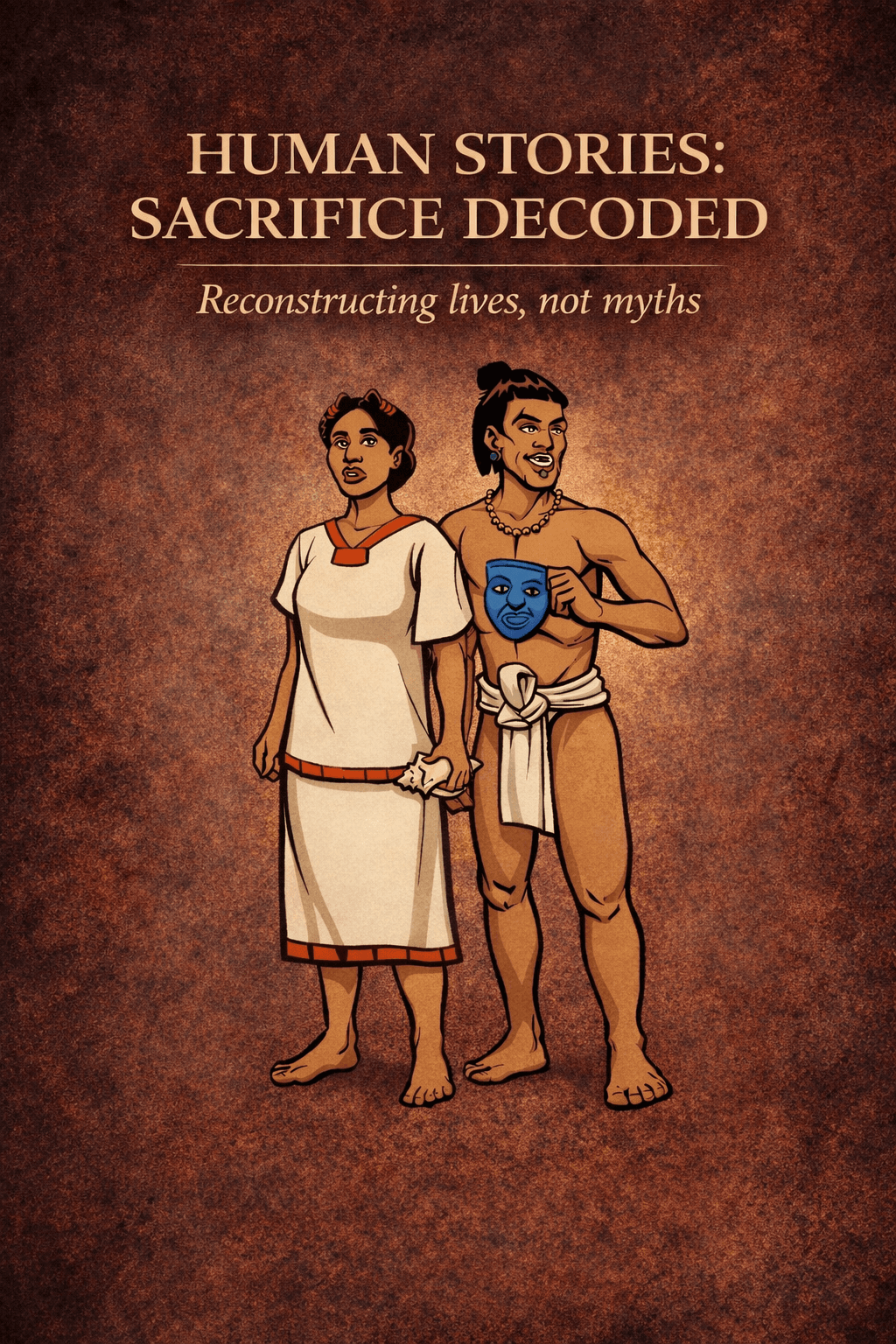
This research endeavor highlights the lives of Indigenous individuals who may have come from a range of sectors of society whose experiences were silenced by the Mexica and Tarascan imperial processes and later misrepresented by the Europeans. As a result, the overarching goal of this project is to contribute to a decolonial, humane, and evidence-based representation of human sacrificial practices in Mesoamerica.
Check our website periodically and follow us on social media to stay informed about our project updates and research outputs!
Stay tuned as we will be curating a virtual exhibit to present the results and insights reached through this project. More details will be shared in early 2027.
About the Project Logo
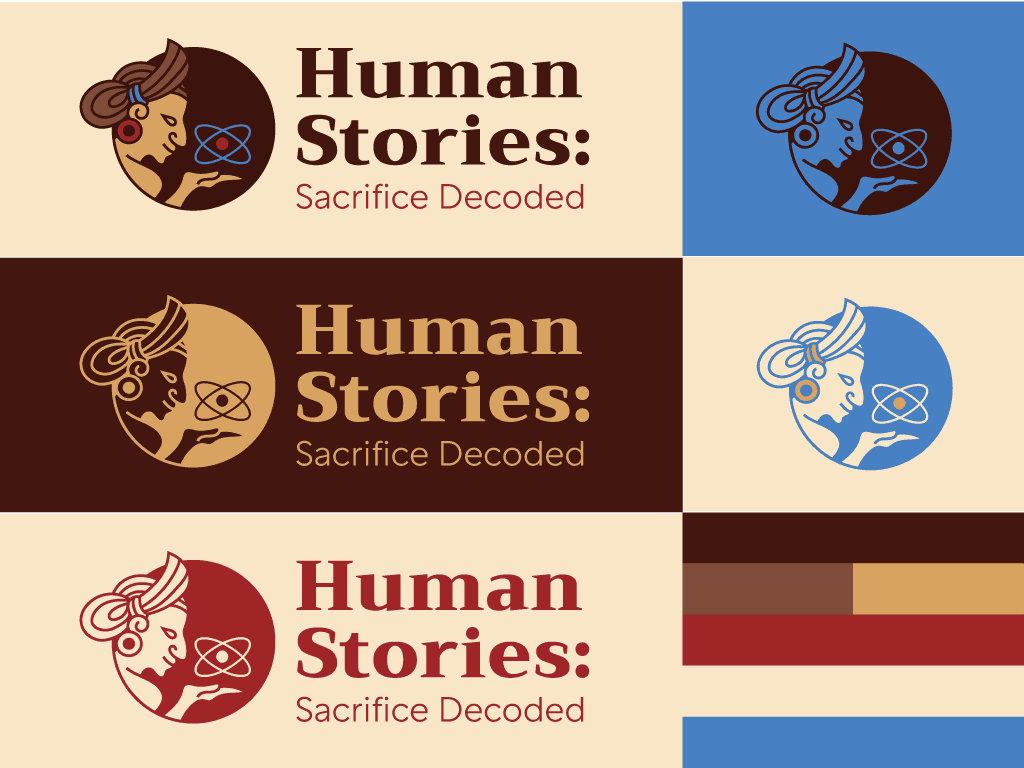
Our project logo was intricately developed by graphic designer August Schaffler following a close alignment with our project scope and goals, while maintaining historical accuracy. It displays a Mesoamerican woman wearing a neaxtlahualli hairstyle – commonly worn by Nahua women in the Aztec empire. She’s holding an atom, representing the scientific methods used to identify and tell the stories of sacrifice victims. The centre of the atom is shaped like an abstracted tecpatl – a knife used in sacrificial rituals. The placement of the tecpatl shape at the centre of the atom mirrors the placement of the tecpatl as Tonatiuh's tongue at the centre of the Mexica Sun Stone, reflecting Mesoamerican human sacrifice’s historical and cultural significance. As such, these main components represent, on the one hand, the historic and archaeological aspects of the project, and on the other, the cutting-edge scientific methods applied, all of which are cohesively integrated in this research.
Based on the available Spanish chronicles, codices and iconography, scholars had previously hypothesized that the vast majority of the sacrificial victims were captured adult male warriors. However, the archaeological and bioarchaeological findings at the Templo Mayor and surrounding areas over the past four decades have brought to light the wide variability within the group of sacrificial victims, as women and children were also selected as sacrifices. As a result, we have chosen the representation of a Mesoamerican woman as the face of our project to highlight this diversity and the wide variability in the sex, age, and overall characteristics of the sacrificial victims during the Postclassic period.
The project’s colour palette takes inspiration from traditional pigments found in Mexica art such as the reconstructed pigments of the Coyolxauhqui stone, while the bright blue sky and red brickwork of one of our research sites: the Templo Mayor of Tenochtitlan.